

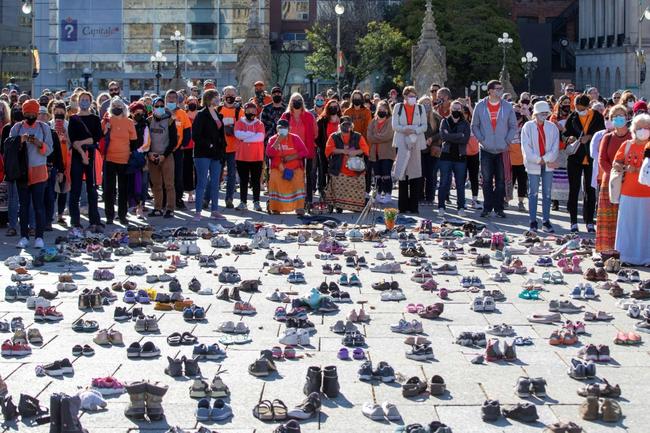
Nearly 150,000 Indigenous children were separated from their families, often by force, between the 1800s and 1990s in an attempt to assimilate them. They were sent to government-funded, church-run schools that prohibited them from speaking Indigenous languages and practicing their traditions. Many faced neglect and abuse.
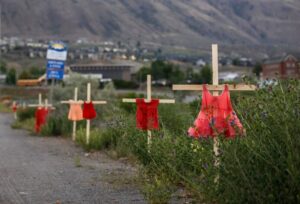
The probe near Williams Lake came after the discovery in May of the probable unmarked graves of Indigenous children at the former Kamloops Indian Residential School in British Colombia, once the largest in Canada. The discovery was announced at 215 graves; after further investigation, the number was revised down to 200.
Officials said on Tuesday the latest 93 sites showed “reflections” indicating “potential human burials” after using ground-penetrating radar on 14 of the hundreds of hectares of the school grounds, though excavation would be necessary to confirm their presence.
The findings at the residential school “where three generations of my family attended is traumatizing, yet it also serves as validation of the stories told,” said Phyllis Webstad, who founded a nonprofit for reconciliation.
“I have often thought of this day,” she wrote in a statement. “I grieve for all who never made it.”
In a tweet on Tuesday, Canadian Prime Minister Justin Trudeau shared the number of a National Indian Residential School Crisis Line set up to support former students. “Today’s news from Williams Lake First Nation brings a lot of distressing emotions to the surface,” he said.